

Branding / Corporate Design
Branding and Corporate Design for Distinctive Brands
deshalb. designs visual identities for companies and organizations that want to sharpen, restructure, or professionally evolve their brand presence. Not as decorative wrapping, but as a clear system that builds recognition, creates consistency, and makes substance visible.

A strong brand presence starts with clarity
Many companies deliver far more than their external image suggests. Not because the quality is missing, but because the way they present themselves has grown over time, become inconsistent, or simply lacks precision.
Branding creates order. It translates attitude, ambition, and positioning into a visual identity that feels professional and works consistently across every relevant touchpoint. That is the difference between arbitrary design and a brand presence that actually holds together.
Branding is more than design
Good branding makes clear how a company should be understood. It does not only translate form, but also attitude, ambition, and position. That is why a strong brand presence does not begin with color or form alone, but with the question of what a brand should express, communicate, and carry over time.
Corporate design is not an end in itself. It creates the foundation for recognition, trust, and consistency. It helps make quality more visible, brings structure to communication, and makes decisions easier across media and formats.
What good branding should achieve
Make quality visible
Strengthen trust
Create recognition
- Bring structure to communication
Enable consistency across all media
Make design and application decisions easier
- Sharpen distinctions more clearly
Make the brand presence stronger over the long term
When branding becomes relevant
Branding becomes especially relevant when presence, development, and perception no longer fit together. When a company changes, new demands emerge, or greater clarity, profile, and consistency are needed in how the brand shows up.
The brand image appears inconsistent or outdated.
The public image no longer matches the actual standards.
Products, services, or offers are not clearly understood.
The brand remains indistinguishable and lacks distinctiveness.
Messages are unclear, too technical, or fail to resonate.
- We’re not getting the right inquiries or reaching the right target audience.
New services, markets, or target audiences are not reflected in the website.
The company’s growth and its brand image are no longer aligned.
The website, presentations, print materials, and other applications do not appear to be part of a cohesive brand.
There is a lack of a clear visual and content framework that simplifies decision-making and ensures consistency.
Branding Services
Not every branding project requires the same scope. Some projects begin with strategic refinement, others with language, and still others with form. What matters is that the result isn’t a loose collection of elements, but a brand identity that is cohesive in both content and visual design.
Strategic and Conceptual Foundations
Analysis of the current website
Analysis of the Market, Business Environment, and Competition
Sharpening the brand positioning and profile
Development of a sound guiding principle
- Definition of Tone and Brand Voice
Organization of brand messages and key statements
Conceptual foundation for a consistent brand identity
Visual Design and System
Development or redesign of a logo and word mark
Typography, Color, and Design System
Corporate Design
Design grid and system logic
- Visual Language and Visual Principles
Rules for digital and analog applications
Brand Guidelines
Adaptation for websites, print, presentations, and other media and channels
How to Create a Clear Brand Identity
1. Analysis
The first step is to analyze the existing brand identity, the market and competitive landscape, and current perceptions. This reveals what is already working, where inconsistencies arise, and what shortcomings are currently weakening the brand’s image.
2. Sharpening the brand positioning
Building on this, we will refine the brand’s content and visual direction. The focus is on brand identity, differentiation, tone, and determining which values, standards, and qualities should be more clearly highlighted in the future.
3. Concept Development
This refinement forms the conceptual foundation. The guiding principle, brand language, and visual direction are distilled in such a way that the result is not a loose set of design decisions, but a robust framework for the entire brand identity.
4. Design Development
The next step is to develop the corporate identity. The logo, typography, colors, grid system, visual language, and other design elements are integrated into a cohesive system that builds brand recognition and works effectively in everyday use.
5. Application and Implementation
Branding is only valuable if it can be effectively applied across real-world media and formats. That is why the system extends to both digital and analog touchpoints, laying the foundation for consistent brand management.
Where branding makes a difference
Branding becomes particularly important when a company’s image, development, and public perception no longer align. This is especially true when a company undergoes changes, new requirements arise, or there is a need for greater clarity, a stronger profile, and greater consistency in its public image.
Rebranding and relaunch
new brand identities
Growth and Professionalization
structural or strategic change
new services, markets, or target groups
The need for greater clarity, recognition, and trust
Not every task requires the same thing
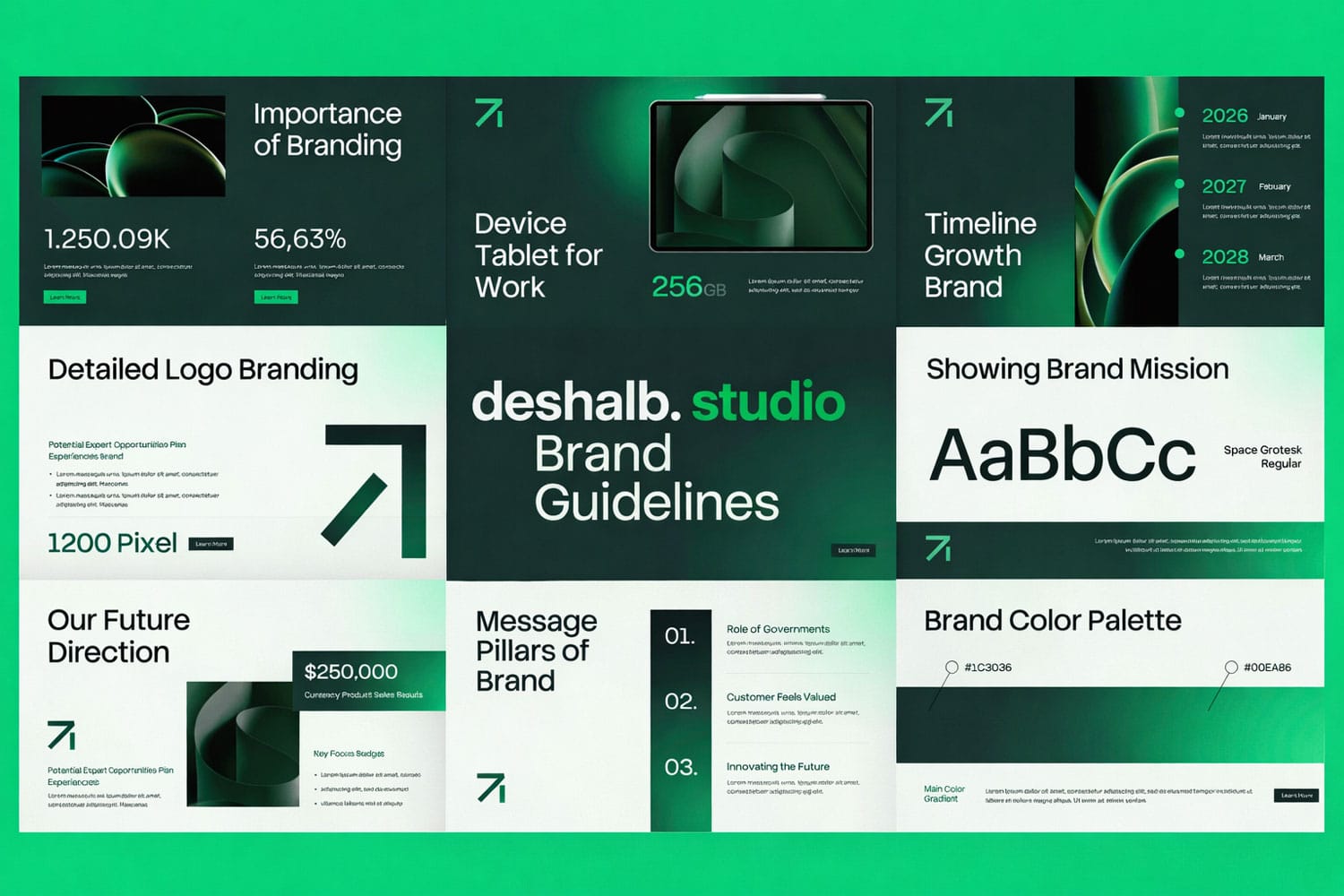
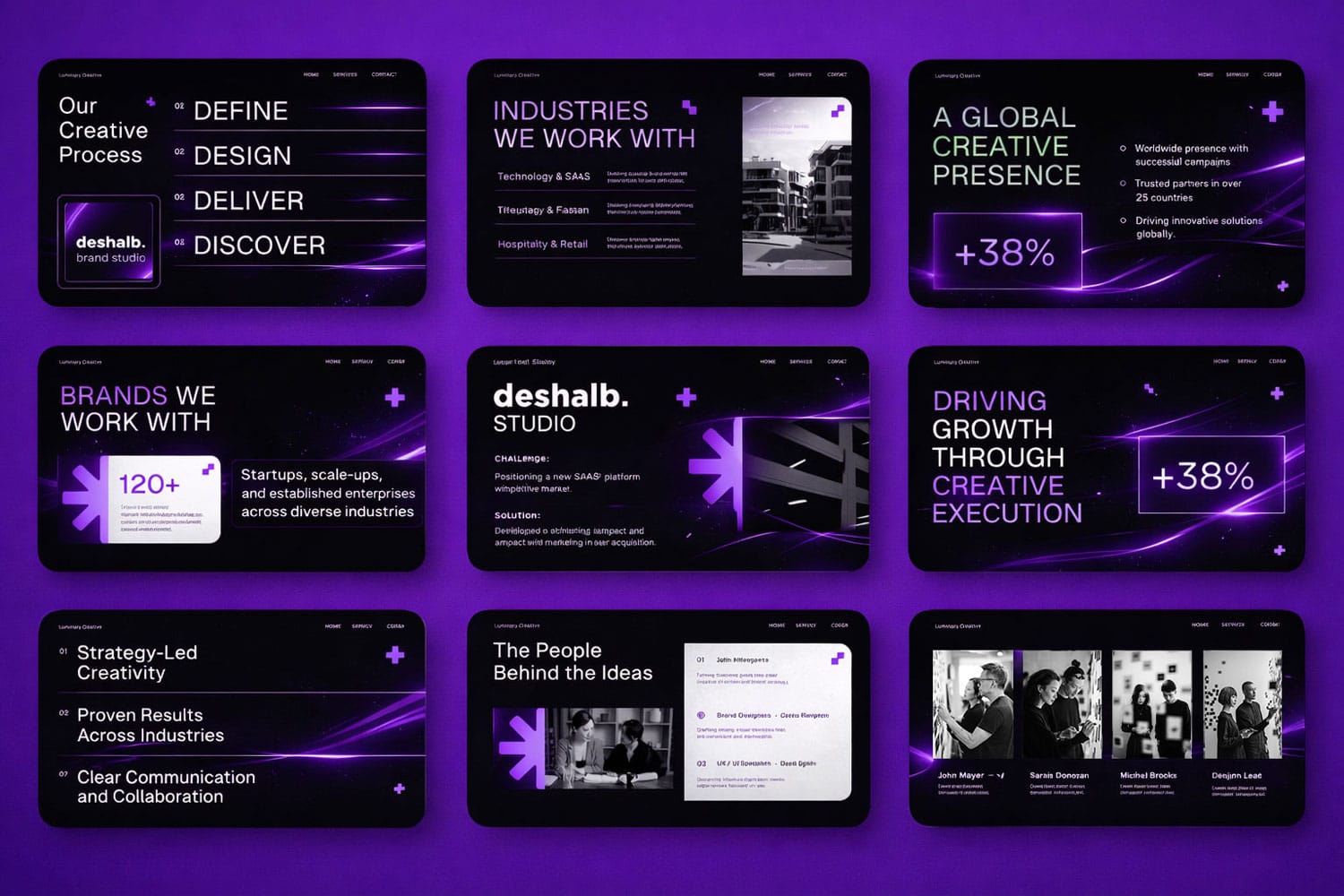
Some projects require a complete rebranding. Others need a clear evolution, a stronger framework, or a more precise visual direction. The scale of the project plays a role here; it helps determine how deeply we delve into the brand, its messaging, and its design. Ultimately, however, what matters most is what the brand needs and the impact its identity is intended to have in the future.
Selected Works
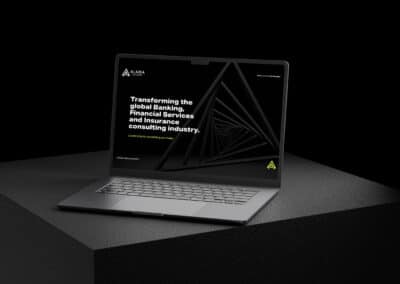
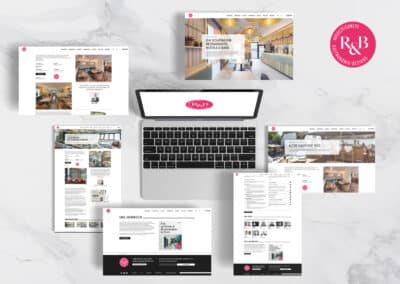
Every brand identity requires a unique approach. Sometimes minimalist. Sometimes bold. Sometimes austere. Sometimes open. What matters isn’t style for style’s sake, but a solution that fits the brand and makes an impact.
Questions that often come up before branding
What does branding involve?
That depends on the scope and depth of the project. A branding project can include analysis, refining the brand’s positioning, tone of voice, brand language, core concept, logo, corporate design, typography, color palette, visual language, guidelines for application, and a consistent system for websites, presentations, print materials, and other touchpoints. Not every brand needs everything. But every brand needs clarity.
How long does a branding project take?
That depends largely on the scope of the project. A focused redesign can be completed in a reasonable amount of time. However, once strategy, brand language, corporate design, applications, and—above all—the website are involved, a branding project can quickly stretch out over several months. The key factors are not only the design tasks themselves, but also content, coordination, technical implementation, and the extent to which the new system integrates with existing structures.
Does rebranding always have to be a complete overhaul?
No. Rebranding can mean many things: a subtle evolution, a visible overhaul, or a completely new direction. What matters isn’t the label, but how much of the existing identity still holds up and what needs to change to make the brand appear clearer, more consistent, and more appropriate.
How much does branding cost?
That depends largely on the scope of the project. A targeted redesign is different from a comprehensive process that includes positioning, brand language, corporate design, and applications. What matters isn’t just how something looks, but how deeply the work goes and what is actually needed in the end. Therefore, the effort involved can only be properly assessed once the objectives, scope, and areas of application are clear.
What does corporate design offer besides a better look?
Corporate design creates brand recognition, facilitates communication, and ensures that a brand’s image remains consistent across all media. It streamlines processes because it clarifies how things should look and which design rules apply. This leads to faster decision-making, more reliable implementation, and less randomness in design. Good design not only shows how something looks, but also how it is understood.
How much internal effort is required on the client's part?
Branding doesn’t happen in a vacuum. Achieving good results requires decision-making, context, and clear feedback. The amount of internal effort involved depends on the organization’s structure, coordination processes, and the scale of the project. The clearer the points of contact, objectives, and decision-making logic are, the smoother the process will run.
A brand identity doesn’t just have to look good. It has to make an impact.
That’s why we develop branding that creates clarity, strengthens recognition, and sticks in people’s minds. For companies that want to sharpen their brand identity and get more out of their brand.